I am looking for a hotel. Lovely pictures, good reviews, and in my mind I am already lying by the pool, a crime novel in one hand, something fizzy in the other. Then the room selection: “Only 1 room left on our site.”
Beads of sweat. Suddenly my question is a different one. “Should I book?” becomes “If I don’t book now, it’s gone.” I booked. Of course.
Research
Why losing hurts more
In 1979, Daniel Kahneman and Amos Tversky described what happens in that moment: losses weigh more heavily than gains of the same size. Kahneman puts the ratio at 1.5 to 2.5. How strong the effect is depends on the situation, though, and researchers do not agree (more in my effect library).
Then there is scarcity. In 1975, Stephen Worchel and colleagues had people rate cookies. When there were only two in the jar, they were rated higher than the same cookies in a full jar. A 2022 analysis of many studies confirms that scarcity increases purchase intent.
Scarcity plus the fear of losing something, and the pressure is on.
Credibility
The line
“Only 1 room left” is a borderline case. If it is true, it helps me decide. If it is not, FRED, the autopilot in my head, notices by the second visit at the latest, and then the trust is gone. A strong lever only works for as long as it is believable.
In practice
And now the metal works
Take a metal works in Minden, a town in north-western Germany. No booking portal, no pool, but the same brains on the customer side. What can be carried over?
- Capacity that really is scarce can be called that: “For delivery in March we still have two production slots free.”
- A time-limited offer needs a real reason. Say what it is.
- In the proposal, do not only show what the customer gains. Show what waiting costs them too, for example every month with the old machine.
Or in one sentence: talk about the benefits and you get compared. Talk about what will be gone and you get booked.
At a business day
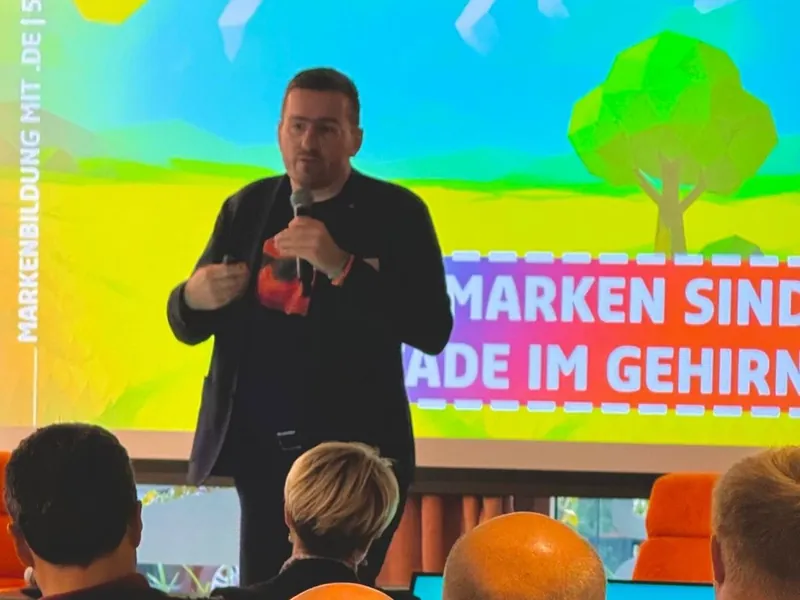
What a keynote can do at a business day
At business days run by chambers of commerce, economic development agencies or associations, the audience is owners and managing directors who have no time for theory. They want to know what to do differently the next day in their proposals, on their website or in sales conversations. That is why I work with examples from their world, Minden rather than Amazon, and with studies I put honestly into context.
Matching keynote
Who this keynote is for
For business days, SME conferences, economic development agencies, chambers and associations. The matching talk is Neuromarketing for SMEs. If it is more about your own brand: Brands. Bring. Business.
FAQ
Frequently asked questions
Does the audience need prior knowledge?
No. The examples come from everyday life, and I explain technical terms along the way.
Are there examples from our region or industry?
Yes, I can build them in on request. That is what Your Tailor-Made Talk is for.
How long is the talk?
45 to 60 minutes, or 20 to 30 minutes as an impulse talk.
About the author
Christian Dietz
Christian Dietz is a neuromarketing speaker and managing director of the agency NEUBLCK. He gives keynotes for companies, associations and conferences across the German-speaking countries, and in English on request.
This keynote for your event
Tell me briefly about your event. I usually reply within 48 hours.